Best Time to Visit Spain with Kids

Spain offers families a rich tapestry of experiences, from Mediterranean beaches and UNESCO World Heritage cities to mountain villages and interactive museums. Choosing the right time to visit means balancing comfortable weather, manageable crowds, and school schedules. Spain's climate varies by region, but the central reference point of Madrid reveals a continental pattern with hot, dry summers and mild, wet winters. For families, the shoulder seasons of late spring and early autumn typically deliver the sweet spot of pleasant temperatures, fewer crowds at major attractions, and enough sunshine for outdoor adventures. Understanding the month-by-month rhythm of weather, school holidays, and regional festivals will help you plan a trip that keeps children engaged and parents relaxed.
| Month | Avg high | Avg low | Rainfall | Rainy days |
|---|---|---|---|---|
| January | 10.1°C | 1.2°C | 37.6 mm | 6.9 |
| February | 12.9°C | 2.5°C | 28.2 mm | 5.6 |
| March | 15.9°C | 4.7°C | 49.3 mm | 8.2 |
| April | 19.0°C | 7.5°C | 61.2 mm | 9.4 |
| May | 24.3°C | 11.6°C | 31.0 mm | 6.1 |
| June | 29.4°C | 16.3°C | 16.3 mm | 3.9 |
| July | 33.9°C | 19.9°C | 7.9 mm | 1.2 |
| August | 33.0°C | 19.4°C | 10.9 mm | 1.6 |
| September | 26.8°C | 15.1°C | 51.5 mm | 5.3 |
| October | 21.7°C | 10.9°C | 62.9 mm | 7.6 |
| November | 14.3°C | 5.8°C | 54.9 mm | 8.8 |
| December | 11.4°C | 3.1°C | 45.2 mm | 6.9 |
Best Overall Months for Families
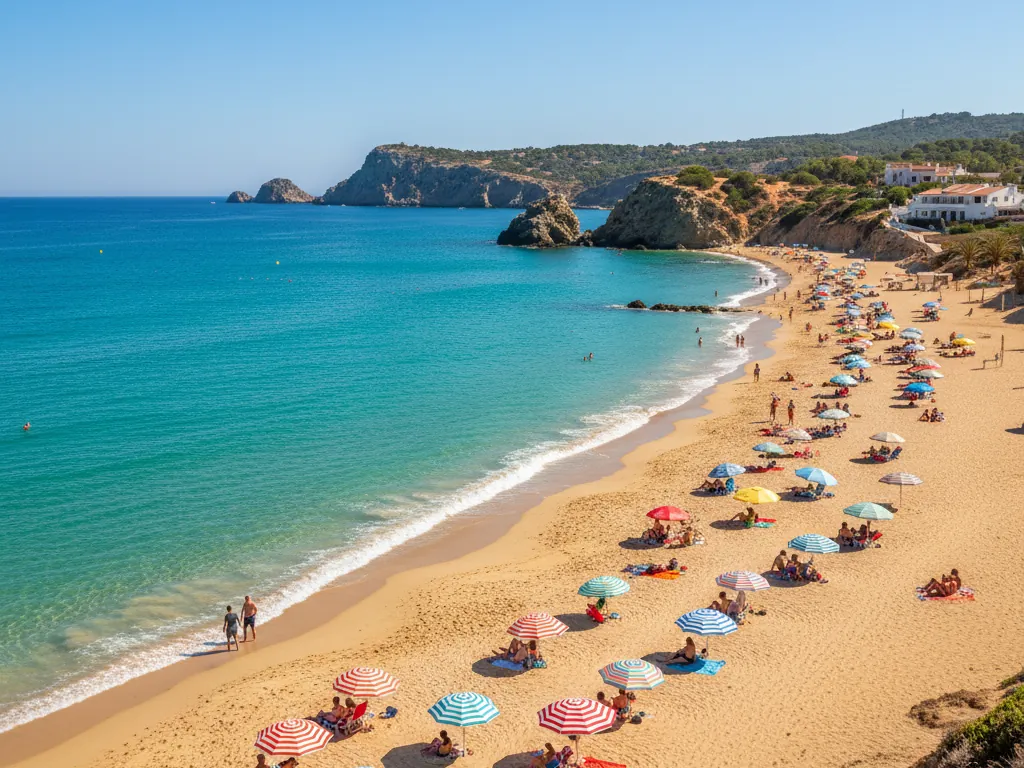
May, June, and September stand out as the prime months for visiting Spain with children. May brings average highs of 24.3°C and lows of 11.6°C in Madrid, with moderate rainfall of 31.0 mm spread across 6.1 rainy days - warm enough for beach trips to the coast yet cool enough for city sightseeing without exhausting young travellers. June heats up to 29.4°C highs and 16.3°C lows with only 16.3 mm of rain over 3.9 days, offering reliable sunshine before the peak summer crush begins. September mirrors this comfort with highs of 26.8°C and lows of 15.1°C, though rainfall increases to 51.5 mm across 5.3 days. These months deliver family-friendly weather for exploring Barcelona's Gothic Quarter, Madrid's parks, or the beaches of Costa Brava without the intense heat or crowds that define July and August. Attractions remain open with full schedules, outdoor cafes welcome families, and children can spend hours at playgrounds or beaches without overheating.
Month-by-Month Breakdown
Each month in Spain offers distinct advantages and challenges for families, shaped by temperature, precipitation, and crowd patterns.
- January: Highs of 10.1°C and lows of 1.2°C make central Spain quite chilly, with 37.6 mm of rain over 6.9 days. Coastal areas remain milder, and this is the quietest season for attractions, though some beach facilities close.
- February: Temperatures edge up to 12.9°C highs and 2.5°C lows, with the lowest rainfall of the year at 28.2 mm over 5.6 days. Carnival celebrations add colour, but pack warm layers for outdoor exploration.
- March: Spring awakens with 15.9°C highs and 4.7°C lows, though rainfall climbs to 49.3 mm across 8.2 days. Flowers bloom in parks, making this a photogenic time for family outings, but weather remains unpredictable.
- April: Highs reach 19.0°C and lows 7.5°C, but April is the wettest month with 61.2 mm of rain over 9.4 days. Easter holidays bring crowds to major cities and popular coastal resorts, yet the countryside bursts with greenery.
- May: Ideal conditions arrive with 24.3°C highs, 11.6°C lows, and moderate 31.0 mm rainfall over 6.1 days. Long daylight hours and comfortable temperatures suit museums, beaches, and outdoor markets equally well.
- June: Highs of 29.4°C and lows of 16.3°C signal summer's arrival, with minimal 16.3 mm rain over just 3.9 days. Schools across Europe begin breaking up late in the month, increasing visitor numbers.
- July: Peak summer heat dominates with 33.9°C highs and 19.9°C lows, and only 7.9 mm of rain over 1.2 days. Beaches and pools become essential, and midday sightseeing can overwhelm young children.
- August: Temperatures stay scorching at 33.0°C highs and 19.4°C lows, with 10.9 mm rain over 1.6 days. Many local businesses close as Spaniards holiday, but coastal resorts reach their busiest.
- September: Relief arrives as highs drop to 26.8°C and lows to 15.1°C, though rainfall rebounds to 51.5 mm over 5.3 days. Crowds thin after Labour Day, making this excellent for families seeking value and comfort.
- October: Autumn settles in with 21.7°C highs and 10.9°C lows, and the second-wettest month brings 62.9 mm over 7.6 days. Warm-weather destinations like Seville and coastal Andalusia remain pleasant, while northern regions turn cooler.
- November: Temperatures drop to 14.3°C highs and 5.8°C lows with 54.9 mm of rain over 8.8 days. Cultural attractions dominate as outdoor activities become less appealing, though prices drop significantly.
- December: Winter chill sets in with 11.4°C highs and 3.1°C lows, plus 45.2 mm rain over 6.9 days. Christmas markets and festive lights brighten cities, but beach destinations close or operate on reduced schedules.

School Holidays vs Shoulder Season Trade-Offs
Families face a perennial dilemma when planning travel to Spain: align with school holiday calendars or venture into quieter shoulder periods. Summer holidays in July and August offer guaranteed sunshine, with highs of 33.9°C and 33.0°C respectively and minimal rain - just 7.9 mm and 10.9 mm for the entire months. Every attraction operates at full capacity, beach clubs welcome families, and children's programmes abound. However, these peak months also bring intense heat that can sap energy for sightseeing, especially for toddlers and younger children who struggle in temperatures nearing 34°C. Major sites like the Sagrada Familia, Alhambra, and Prado Museum experience their longest queues, and coastal accommodations reach their highest rates. Spring and autumn breaks during Easter or October half-term offer compelling alternatives. May delivers 24.3°C highs with only 31.0 mm of rain, providing comfortable conditions for both beach time and cultural exploration without the summer intensity. September mirrors this balance with 26.8°C highs and noticeably thinner crowds once European schools reopen. The trade-off is weather predictability - October sees 62.9 mm of rain over 7.6 days, and April records 61.2 mm over 9.4 days, meaning you may face occasional afternoon showers that disrupt outdoor plans. For many families, the payoff of shorter lines, lower prices, and temperate weather outweighs the small risk of wet afternoons.

Weather by Season
Spain's four seasons create distinct family travel experiences shaped by temperature, rainfall, and regional variation.
Spring (March-May): Central Spain warms from 15.9°C in March to 24.3°C by May, with lows rising from 4.7°C to 11.6°C. Rainfall peaks in April at 61.2 mm over 9.4 days, but May dries out to 31.0 mm across 6.1 days. Mediterranean coastal areas enjoy milder conditions earlier, while northern regions like the Basque Country remain cooler and wetter. Spring is ideal for city exploration, as parks bloom and outdoor terraces open, though packing layers for variable weather is essential.
Summer (June-August): Heat dominates with June reaching 29.4°C, then July and August soaring to 33.9°C and 33.0°C respectively. Overnight lows stay warm at 16.3°C to 19.9°C. Rainfall nearly vanishes - June sees only 16.3 mm over 3.9 days, July just 7.9 mm over 1.2 days, and August 10.9 mm over 1.6 days. This dry, hot period suits beach holidays and poolside resorts, though midday heat requires breaks indoors with air conditioning. Coastal areas benefit from sea breezes, while inland cities can feel stifling.
Autumn (September-November): September offers summer warmth without extremes at 26.8°C highs and 15.1°C lows, though rain returns at 51.5 mm over 5.3 days. October cools to 21.7°C and 10.9°C with the heaviest rainfall of 62.9 mm over 7.6 days. November drops to 14.3°C and 5.8°C with 54.9 mm over 8.8 days. Early autumn remains excellent for families seeking pleasant weather without crowds, while late autumn shifts focus to indoor cultural attractions as temperatures decline.
Winter (December-February): Madrid and central Spain experience genuine cold with December highs of 11.4°C and lows of 3.1°C, January at 10.1°C and 1.2°C, and February at 12.9°C and 2.5°C. Rainfall remains moderate - December sees 45.2 mm over 6.9 days, January 37.6 mm over 6.9 days, and February the driest winter month at 28.2 mm over 5.6 days. Southern coastal areas like Malaga and the Canary Islands offer warmer winter escapes, but families should expect limited beach weather and the need for warm clothing for sightseeing.
What to Pack for Spain with Kids
Packing strategically for Spain means preparing for regional climate differences and seasonal temperature swings. For spring visits in March through May, when highs range from 15.9°C to 24.3°C and lows from 4.7°C to 11.6°C, layering proves essential. Bring lightweight long-sleeve shirts, a medium-weight jacket for mornings and evenings, and a compact rain jacket or umbrella since April brings 61.2 mm over 9.4 rainy days. Comfortable walking shoes with good support matter for cobblestone streets, and a sun hat plus sunscreen protect against strengthening spring sunshine. Summer packing for June through August simplifies with temperatures hitting 29.4°C to 33.9°C and minimal rain - just 16.3 mm to 7.9 mm monthly. Prioritize breathable cotton or linen clothing, wide-brimmed hats, high-SPF sunscreen, and refillable water bottles to combat heat. Swimsuits, beach toys, and sandals are non-negotiable, but pack a light cardigan for overly air-conditioned restaurants. Autumn travel in September through November requires a return to layers as temperatures drop from 26.8°C to 14.3°C, with rainfall increasing to 54.9-62.9 mm in October and November. A waterproof jacket, closed-toe walking shoes, and a mix of short and long sleeves handle variable conditions. Winter visitors in December through February need warm coats, as lows reach 1.2°C to 3.1°C in Madrid, along with scarves, gloves for children, and waterproof footwear for the 37.6-45.2 mm of rain. Regardless of season, pack a small day pack for carrying snacks, water, and extra layers for children, and bring European plug adapters for charging devices.
Crowd and Price Seasonality
Understanding when Spain experiences peak, shoulder, and low seasons helps families find the best value and most enjoyable experience. Peak season runs from late June through August and coincides with school summer holidays across Europe and North America. During this window, major attractions like Barcelona's Park Güell, Madrid's Royal Palace, and Seville's cathedral see their longest queues, often requiring advance timed-entry tickets. Coastal resorts and islands reach capacity, and popular family hotels book months ahead. Easter week in late March or April also creates a peak period, particularly in Andalusia where elaborate processions draw crowds. Shoulder seasons in May, early June, September, and early October deliver the sweet spot for families. Attractions remain fully operational with shorter wait times, and the weather stays comfortable - May highs of 24.3°C and September highs of 26.8°C suit all-day exploration. Accommodation rates drop compared to peak summer, and restaurants welcome families without the rush. Low season spans November through February, excluding Christmas and New Year weeks. Museums and cultural sites experience minimal crowds, and prices reach their lowest points. However, beach destinations scale back services, some attractions reduce hours, and cooler temperatures of 10.1°C to 14.3°C limit outdoor activities. Families willing to focus on cities, museums, and indoor experiences can find excellent value during low season, though the trade-off is less predictable weather with 37.6-54.9 mm of rain monthly and the need for warm clothing. For budget-conscious families seeking the best balance, late May, early June, and September offer near-peak weather at shoulder-season prices with manageable crowds.
FAQ
What is the best month to visit Spain with young children to avoid extreme heat?
May and September offer the most comfortable temperatures for young children, with May reaching highs of 24.3°C and lows of 11.6°C, and September recording 26.8°C highs and 15.1°C lows. Both months avoid the intense heat of July and August, when temperatures soar to 33.9°C and 33.0°C respectively, which can overwhelm toddlers and make midday sightseeing difficult. These shoulder months provide warm enough weather for beaches and outdoor activities without the risk of heat exhaustion during city tours.
When does Spain have the least rainfall for families planning outdoor activities?
July records the driest conditions with only 7.9 mm of rain over 1.2 rainy days, followed closely by August with 10.9 mm over 1.6 days and June with 16.3 mm over 3.9 days. Summer months from June through August deliver reliable sunshine for beach days, theme parks, and outdoor adventures. February also stays relatively dry with 28.2 mm over 5.6 days, though cooler temperatures of 12.9°C highs make it less suitable for traditional outdoor family activities.
How can families visit Spain during school holidays without facing overwhelming crowds?
Consider travelling during spring break in early May before most European schools dismiss, or arrive in early September immediately after Labour Day when North American schools reopen but weather remains excellent with highs of 26.8°C. Easter week should be avoided in major cities like Seville where processions create intense crowding. For winter breaks, focus on cultural experiences in Madrid or Barcelona during late January through February when temperatures reach 12.9°C but attractions see their lowest visitor numbers of the year.
What should families pack for a trip to Spain in October with unpredictable autumn weather?
October brings the second-highest rainfall at 62.9 mm over 7.6 days with temperatures of 21.7°C highs and 10.9°C lows, requiring versatile layering. Pack a waterproof jacket with hood for each family member, closed-toe walking shoes that handle wet cobblestones, and a mix of short-sleeve and long-sleeve shirts to adjust throughout the day. Include a compact travel umbrella, light sweaters for evening outings, and a change of clothes in your day bag in case afternoon showers catch you between attractions.
Weather data: open-meteo (ERA5 reanalysis, 2014-2023 averages). Reviewed and updated periodically.