Best Time to Visit Hungary with Kids

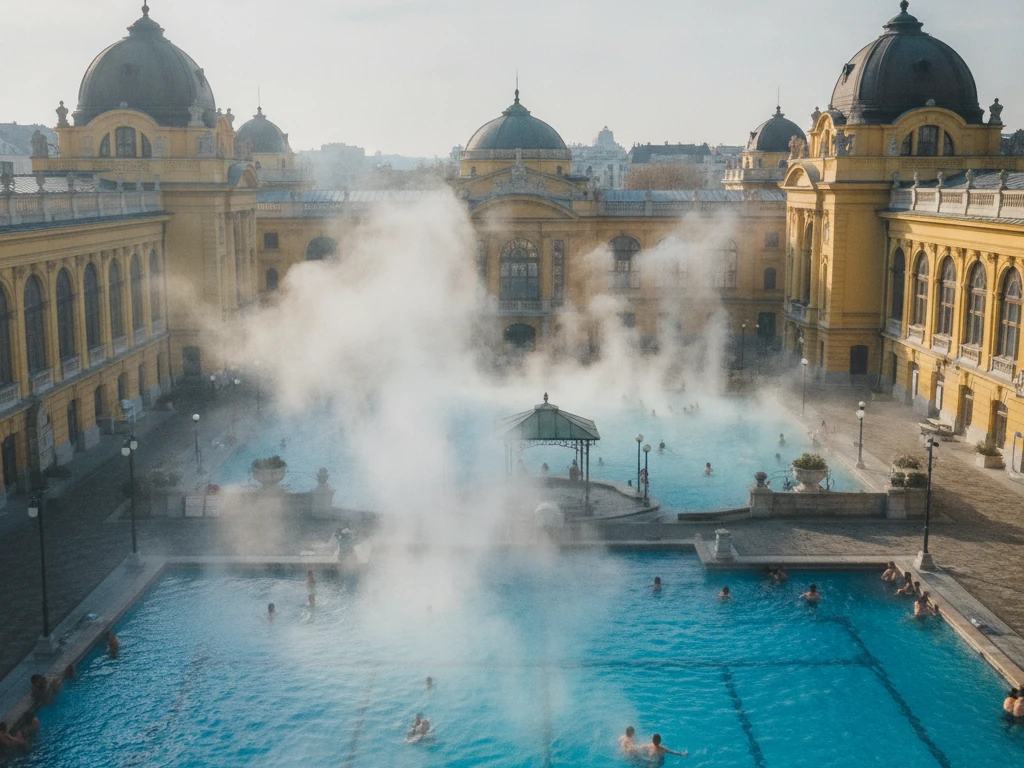
Hungary offers families a compelling mix of fairy-tale castles, thermal baths that delight children, and a capital city brimming with history and playgrounds along the Danube. Timing a family visit to Hungary means balancing mild weather, school holidays, and the type of experience families seek - whether splashing in Lake Balaton's shallows, exploring Budapest's caves, or enjoying Christmas markets. The country's continental climate brings warm, sunny summers and cold, occasionally snowy winters, with spring and autumn offering comfortable temperatures and fewer crowds. Understanding the seasonal patterns of temperature in Hungary, rainfall in Hungary, and crowd levels helps families choose the best months for their travel style and children's ages.
| Month | Avg high | Avg low | Rainfall | Rainy days |
|---|---|---|---|---|
| January | 4.1°C | -2.0°C | 41.6 mm | 9.6 |
| February | 7.5°C | -0.2°C | 44.8 mm | 9.4 |
| March | 12.0°C | 2.0°C | 38.1 mm | 7.1 |
| April | 16.8°C | 6.3°C | 44.4 mm | 9.5 |
| May | 20.8°C | 11.3°C | 80.5 mm | 12.9 |
| June | 26.1°C | 16.2°C | 65.2 mm | 10.2 |
| July | 28.1°C | 17.9°C | 72.9 mm | 9.8 |
| August | 27.7°C | 17.5°C | 65.1 mm | 8.9 |
| September | 22.5°C | 13.2°C | 72.3 mm | 8.4 |
| October | 16.6°C | 8.1°C | 61.8 mm | 8.3 |
| November | 9.9°C | 3.6°C | 56.5 mm | 9.5 |
| December | 5.1°C | -0.3°C | 53.5 mm | 8.3 |
Best Overall Months for Families
May, June, and September stand out as the best time to visit Hungary with kids for most families. May in Hungary sees pleasant highs around 20.8°C and lows of 11.3°C, though rainfall reaches 80.5 mm across roughly 13 rainy days - the wettest month of the year. Despite occasional showers, the countryside bursts into bloom, outdoor attractions open for the season, and crowd levels remain manageable before the summer peak. June brings warmer conditions with highs of 26.1°C and lows of 16.2°C, along with reduced rainfall at 65.2 mm over about 10 rainy days, making it ideal for lake activities and outdoor exploration. September offers a sweet spot with comfortable highs of 22.5°C, cool nights at 13.2°C, and moderate rainfall of 72.3 mm spread across just 8-9 rainy days. The summer heat has eased, making city sightseeing more pleasant for young children, while Lake Balaton remains warm enough for swimming into early autumn. These shoulder and early-peak months provide the best balance of family-friendly weather in Hungary, manageable tourist traffic, and full access to attractions without the intensity of July and August crowds.
Month-by-Month Breakdown for Family Travel
Understanding how each month performs helps families align their visit with specific interests and constraints. Winter months from December through February see cold conditions - January records highs of just 4.1°C and lows of -2.0°C, while December and February hover similarly chilly with temperatures near or below freezing at night. Rainfall during winter months ranges from 41.6 mm to 53.5 mm, often falling as snow, with 8-10 rainy days per month. These months suit families seeking Christmas markets, thermal bath experiences, and indoor museums, but outdoor activities become limited. March marks the transition to spring with highs reaching 12.0°C and lows of 2.0°C, plus the year's lowest rainfall at just 38.1 mm over 7 rainy days - excellent for early-season exploration with older children who tolerate cooler weather. April brings milder conditions at 16.8°C highs and 6.3°C lows with 44.4 mm of rain across 9-10 rainy days, though Easter holidays can increase crowds. The summer trio of June, July, and August delivers the warmest weather in Hungary - July peaks at 28.1°C highs and 17.9°C lows, while August reaches 27.7°C and 17.5°C. Rainfall remains moderate at 65-73 mm monthly with 9-10 rainy days, but these months see peak family tourism. October offers mild autumn weather with 16.6°C highs and 8.1°C lows plus 61.8 mm of rain, while November turns noticeably cooler at 9.9°C highs and 3.6°C lows with 56.5 mm of rainfall, suitable primarily for city breaks and cultural visits.

School Holidays vs Shoulder Season Trade-offs
Families face a familiar dilemma when planning Hungary trips: travel during convenient school breaks or opt for quieter shoulder periods. Summer school holidays align perfectly with Hungary's warmest and driest conditions relative to crowd sizes, but July and August bring peak visitor numbers to major attractions like Budapest Castle District, Lake Balaton resorts, and popular thermal baths. Families traveling during these months encounter longer queues at attractions, fuller restaurants, and a more bustling atmosphere in family-friendly destinations. The advantage lies in guaranteed warm weather for outdoor activities and lake swimming, with July and August offering highs around 27-28°C and comfortable evening temperatures of 17-18°C. Spring break periods in April see moderate crowds and pleasant 16.8°C daytime temperatures, though 6.3°C evenings require warmer layers and 44.4 mm of rainfall across 9-10 days means packing rain gear. Shoulder season travel in May, early June, or September provides the best value proposition for flexible families - September particularly offers warm 22.5°C days, cooler 13.2°C nights ideal for sleeping, and noticeably thinner crowds as European schools resume. The trade-off involves pulling children from school or traveling with very young children not yet in formal education, but the reward includes shorter attraction lines, easier restaurant reservations, and a more authentic experience of Hungarian daily life beyond the tourist bustle.
Weather by Season for Family Activities
Hungary's four distinct seasons each offer different opportunities for families. Spring (March through May) brings awakening landscapes and temperatures climbing from 12.0°C in March to 20.8°C by May, with nighttime lows rising from 2.0°C to 11.3°C. Rainfall varies significantly - March sees just 38.1 mm over 7 rainy days, while May becomes the wettest month at 80.5 mm across 13 rainy days. Spring suits families interested in Budapest's parks, cave tours, and cultural attractions without summer heat. Summer (June through August) dominates for family travel with consistent warmth - June at 26.1°C, July peaking at 28.1°C, and August at 27.7°C for daytime highs, while nights remain comfortable at 16-18°C. Rainfall stays moderate at 65-73 mm monthly with 9-10 rainy days, and this season is best for Lake Balaton swimming, outdoor festivals, and extended daylight hours for sightseeing. Autumn (September through November) offers pleasant early conditions with September at 22.5°C highs and 13.2°C lows, cooling through October (16.6°C and 8.1°C) to chilly November (9.9°C and 3.6°C). Rainfall ranges from 56.5 mm to 72.3 mm across 8-10 rainy days, making autumn ideal for harvest festivals, hiking, and city exploration before winter's chill. Winter (December through February) brings cold temperatures - December at 5.1°C highs and -0.3°C lows, January coldest at 4.1°C and -2.0°C, and February slightly milder at 7.5°C and -0.2°C. Rainfall of 42-54 mm across 8-10 rainy days often falls as snow, creating a magical atmosphere for Christmas markets and making thermal baths particularly appealing for families who enjoy winter travel.
What to Pack for Hungary with Children
Packing for Hungary depends heavily on travel season and planned activities. Summer visitors (June through August) should pack lightweight clothing for 26-28°C daytime heat, including sun hats, sunglasses, and sunscreen for children, plus swimwear for thermal baths and lake visits. Evening temperatures of 16-18°C mean bringing light jackets or cardigans for dinners and evening strolls. Rain gear remains important even in summer - with 9-10 rainy days monthly and 65-73 mm of rainfall, a compact umbrella and light rain jackets protect against sudden showers. Spring and autumn travelers need layering systems to handle variable conditions: March sees 12.0°C days but 2.0°C nights, while May reaches 20.8°C but experiences the year's highest rainfall at 80.5 mm. Pack medium-weight jackets, long pants, and closed-toe shoes alongside some t-shirts, and always include waterproof outer layers and rain boots for children. September offers easier packing with 22.5°C days and 13.2°C nights requiring just light sweaters and one warm layer. Winter visitors (December through February) must prepare for cold conditions with 4-8°C daytime highs and temperatures dropping to -2°C to 0°C at night. Heavy winter coats, insulated boots, warm hats, gloves, and scarves are essential for all family members, plus thermal underwear for children who feel cold easily. Snow gear may be needed as rainfall of 42-54 mm often falls as snow. Regardless of season, comfortable walking shoes suit all family members for cobblestone streets in Budapest and castle grounds, and a small backpack carries snacks, water, and layers for children throughout day trips.
Crowd Levels and Price Seasonality
Hungary's tourism patterns follow predictable seasonal rhythms that significantly impact family experiences. Peak season spans July and August when European summer holidays drive maximum visitor numbers to Budapest landmarks, Lake Balaton beaches, and family attractions throughout the country. Accommodations and flights reach their highest rates during these months, and popular sites like Buda Castle and Fisherman's Bastion see substantial queues, particularly mid-morning through afternoon. Families accept these trade-offs for guaranteed warm weather and school holiday convenience. Shoulder seasons in May, June, and September offer compelling alternatives - June sits at the cusp of peak season with building crowds but not yet maximum density, while May and September provide noticeably quieter conditions at major attractions. Pricing during shoulder months typically falls below peak summer rates, and restaurant reservations become easier to secure. The advantage of September particularly lies in still-warm weather (22.5°C) combined with post-summer crowd drops as schools reopen across Europe. Low season from November through March brings the quietest conditions and lowest prices, appealing to budget-conscious families or those content with indoor attractions, thermal baths, and winter festivities. December sees a brief uptick around Christmas markets, but January and February remain genuinely quiet with minimal tourist traffic. April represents a transitional period with moderate crowds during Easter holidays but otherwise manageable visitor levels, while October similarly offers reducing crowds as autumn progresses and temperatures cool from 16.6°C down toward winter conditions. Families prioritizing smaller crowds and better value find May and September optimal, while those requiring school holiday dates accept July and August premiums for peak conditions.
FAQ
What is the best month to visit Hungary with young children who need predictable weather?
June and September provide the most reliable weather for families with young children. June in Hungary offers warm 26.1°C days and mild 16.2°C nights with moderate 65.2 mm rainfall across 10 rainy days, giving families warm conditions without July-August peak heat. September delivers comfortable 22.5°C highs and cool 13.2°C lows with 72.3 mm of rain spread across just 8-9 rainy days, ideal for nap schedules and stroller touring without overheating, while Lake Balaton remains swimmable into early autumn.
Is Hungary too cold to visit with kids during winter months for a Christmas market trip?
Hungary's winter is cold but manageable for families prepared with proper clothing. December sees 5.1°C highs and -0.3°C lows with 53.5 mm of precipitation across 8 rainy days, often falling as snow. January is coldest at 4.1°C daytime and -2.0°C at night with 41.6 mm of rainfall. Families equipped with heavy coats, insulated boots, and warm layers can enjoy magical Christmas markets, thermal bath visits, and indoor museums, though outdoor sightseeing becomes limited and young children may struggle with extended cold exposure.
How much rain should families expect when visiting Hungary in May compared to summer months?
May is Hungary's wettest month with 80.5 mm of rainfall across approximately 13 rainy days, significantly more than summer months. June receives 65.2 mm over 10 rainy days, July sees 72.9 mm across 10 rainy days, and August gets 65.1 mm over 9 rainy days. Despite higher May rainfall, the 20.8°C temperatures and blooming landscapes attract families willing to pack rain gear and plan flexible itineraries with indoor backup options like museums and thermal baths.
What months offer the best combination of good weather and fewer crowds for families visiting Lake Balaton?
Early June and September provide the ideal balance for Lake Balaton family visits. Early June offers 26.1°C temperatures and 16.2°C nights with 65.2 mm of rainfall before peak July-August crowds arrive, allowing families to enjoy warm swimming conditions with more space on beaches and shorter restaurant waits. September maintains pleasant 22.5°C days and 13.2°C evenings with 72.3 mm of rain across 8-9 rainy days while European families return to school, creating a relaxed atmosphere perfect for end-of-summer lake holidays without peak season intensity.
Weather data: open-meteo (ERA5 reanalysis, 2014-2023 averages). Reviewed and updated periodically.